

If your child has ever asked, “But why does that happen?” and you didn’t quite have a satisfying answer, you already know how curious young minds can be. That’s exactly the gap that good science kits for kids are designed to fill, turning “why” questions into hands-on answers your child can actually see and touch.
Across New Zealand, more parents and teachers are moving away from screen-based learning and back toward tactile, experiment-driven activities. And it makes sense: kids remember what they build far longer than what they watch.
Why Hands-On Science Matters More Than Ever
Children today have endless access to information, but access isn’t the same as understanding. Watching a video about circuits is very different from building one yourself and seeing the light actually turn on.
The Learning Science Behind It
Educational research consistently points to the same idea: active, hands-on learning improves retention far more than passive observation. When a child physically assembles something, tests it, and sees the result, that experience sticks in a way a worksheet or video simply can’t match.
Building Confidence, Not Just Knowledge
Beyond the science itself, these kits teach something equally valuable — the confidence to try, fail, adjust, and try again. That’s a mindset that carries well beyond the kitchen table experiment and into how kids approach challenges more broadly.
What to Look for in Quality Science Kits for Kids
Not every kit on the market is built with the same care, so it helps to know what separates a genuinely good one from a flashy box that gets used once and forgotten.
- Clear, age-appropriate instructions that a child can follow with minimal adult help
- Reusable or expandable components, so the learning doesn’t stop after one experiment
- Real educational grounding, not just novelty for novelty’s sake
- Safety-tested materials, especially important for younger children
Age Ranges and Skill Levels
Younger children generally do best with simple, highly visual experiments—think color changes, magnets, or basic circuits. Older kids can handle more involved builds that require patience and multi-step assembly, which is where STEM kits really start to shine.
The Next Step Up From Basic Science Kits
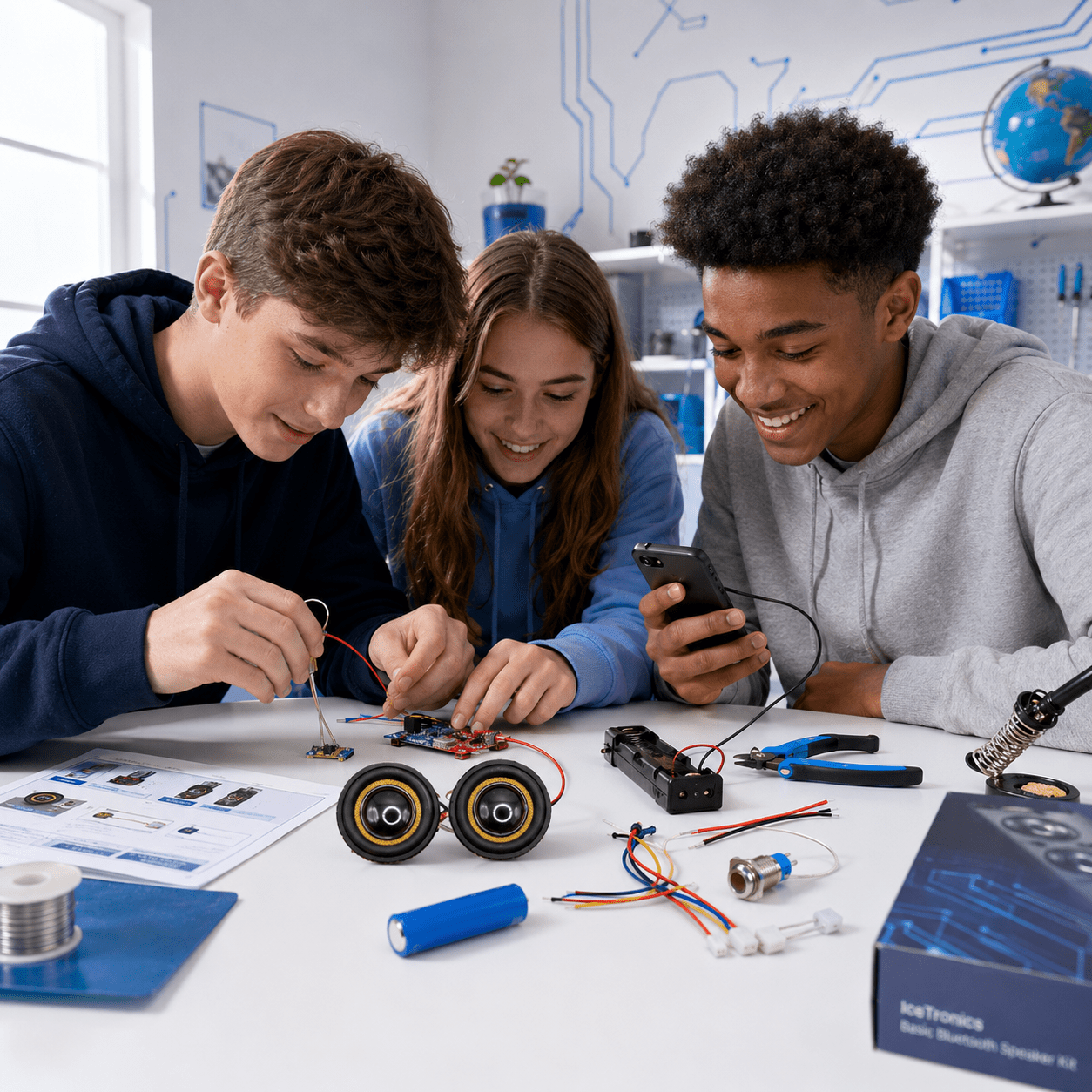
Once a child has enjoyed a few science experiments, STEM kits are a natural next step. Rather than a single experiment, STEM kits typically guide kids through a full build—combining science, technology, engineering, and math into one connected project, like assembling a small circuit, a simple robot, or an electronic device from scratch.
This matters because real-world problem-solving rarely fits into one subject box. STEM kits reflect that by asking kids to plan, build, test, and troubleshoot, much like an actual engineer would.
Pro Tips for Getting the Most Out of a Kit
- Let your child do as much of the assembly as possible, even if it’s slower.
- Ask open-ended questions along the way (“What do you think will happen if…?”)
- Keep a small notebook for kids to jot down what worked and what didn’t.
- Revisit older kits occasionally, since kids often notice new details as they grow
Common Mistakes Parents Make
- Doing too much of the building themselves, which quietly removes the learning value
- Choosing kits that are too advanced too soon, leading to frustration instead of curiosity
- Treating it as a one-off activity rather than encouraging kids to revisit and experiment further
- Skipping the “why” conversation after the experiment is done, missing a chance to reinforce the concept
Expert Advice and Best Practices
Educators who work with STEM programs regularly emphasize the same point: the goal isn’t a perfect result; it’s the process of trying. A wobbly circuit that eventually lights up teaches more than a perfect one built entirely by an adult. Encouraging kids to troubleshoot their own mistakes is often where the real learning happens.
Conclusion
Good science kits for kids do more than fill an afternoon — they build curiosity, confidence, and real problem-solving skills that last well beyond the experiment itself. And once your child is hooked, moving up to STEM kits is a natural way to keep that momentum going with more advanced, hands-on challenges.
Ready to spark that curiosity at home? Explore IceTronics‘ range of science and STEM kits and find the right fit for your child’s next hands-on adventure.